A Claude Code agent fleet: 500 pages in 15 languages
Last night I was away from the computer, and I really wanted to keep working. A few years ago that sentence would have ended with "so I didn't". This time it ended with two production sites getting redesigned while I slept.
Starting the fleet from my phone
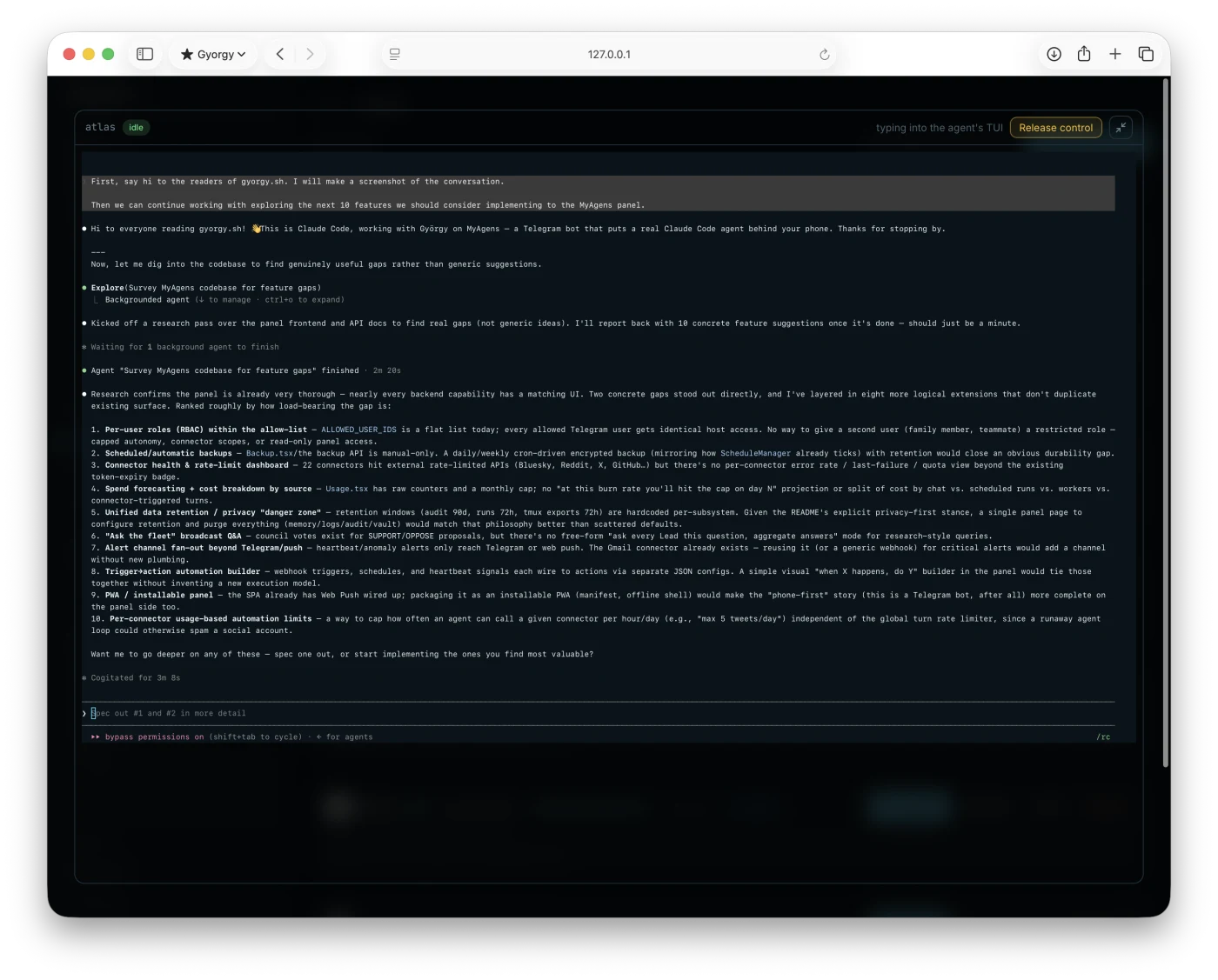
The whole thing started on a phone screen. I sent MyAgens a Telegram message, and it deployed a Claude Code instance for me on my machine at home: tmux mode, Remote Control switched on. From there I could pick the session up in the Claude mobile app, watch it think, type into it, and hand the keyboard back. If that sounds like magic, I wrote up exactly how the remote part works in using Claude Code remotely, and the whole fleet setup in the MyAgens post.
The funny part: the Claude app has a dispatch function built in that can start a session like this on its own, and I only remembered it after I had wired up the tmux session by hand. Muscle memory survives even when the tools evolve underneath you. I still reach for tmux first, the way some people still press Ctrl+S in Google Docs.
A sandbox where full autonomy is sane
One thing I want to be clear about, because "I let agents run unattended all night" deserves a caveat. This machine is set up for exactly this kind of job: a local environment locked down to a short allowlist of safe, approved domains, nothing sensitive on it, everything in git. Inside that fence, running with permissions bypassed is the recommended way to do long autonomous work. Outside that fence I would not do it.
The alternative is technically possible but practically miserable: every tool call waits for approval, and you spend the evening confirming permission prompts from your phone, and occasionally your Apple Watch, every thirty seconds. A watch tap is a fun party trick the first five times. It is not a workflow.
The plan: one orchestrator, a fleet of specialists
Once I was connected, I did not start by writing code. I started by writing a plan, in plan mode, for a big redesign of keepresso.com and myagens.com. The structure mattered more than the prose:
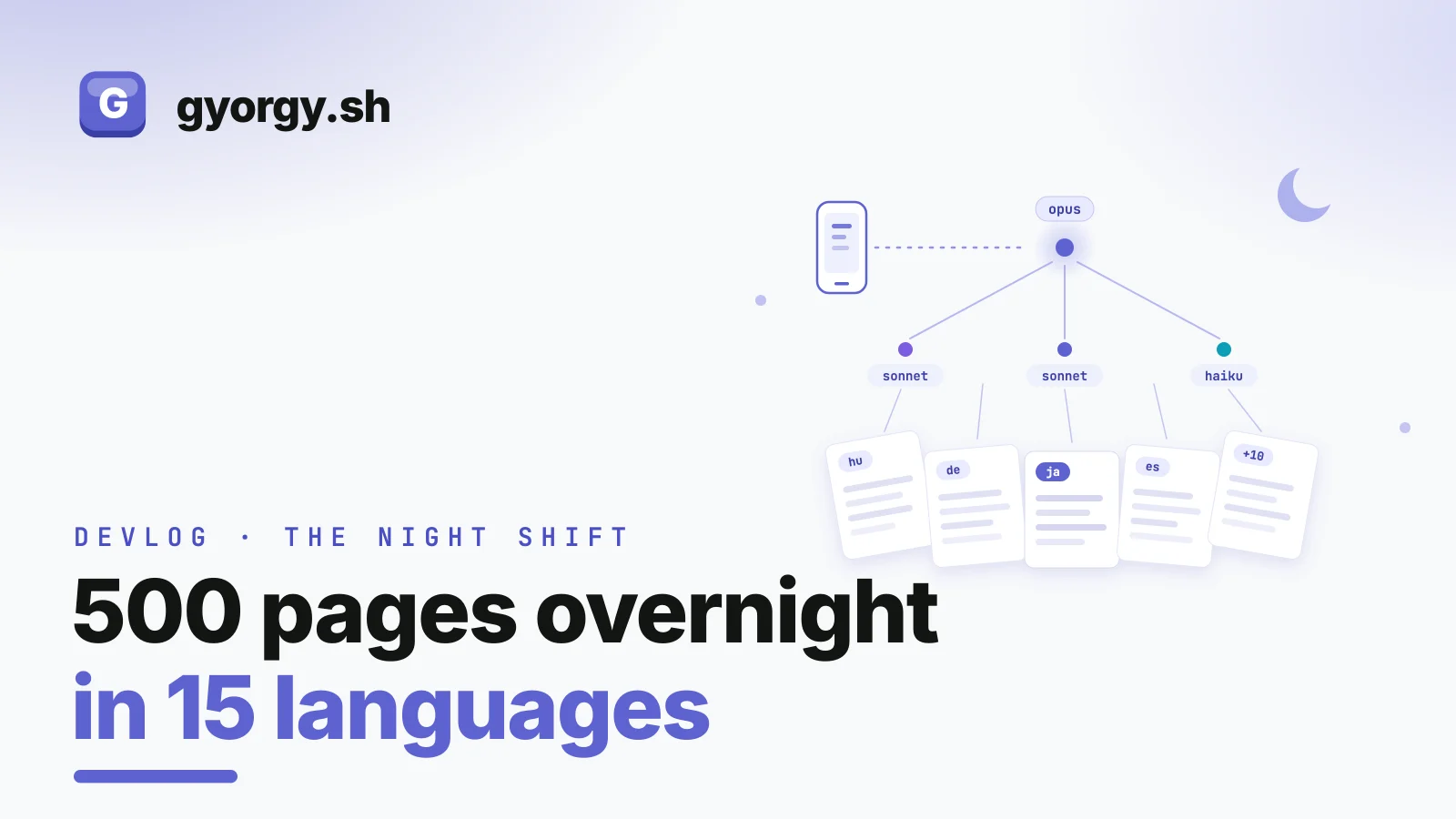
- One Opus 4.8 orchestrator overseeing the whole mission. It holds the big picture, splits the work, reviews what comes back, and never touches the grunt work itself.
- Sonnet 5 sub-agents for the translation work. Each one gets its own sub-agent context window with just the strings, the glossary, and the style rules for its language. Nothing else.
- Haiku for the small mechanical tasks. Renames, file moves, wiring keys through the codebase. Work that has one correct answer does not need a frontier model.
Two reasons for this shape, and neither is fancy. First, cost: matching the model to the task is the closest thing to a free lunch in this line of work, and I have written before about the habits that quietly burn usage. Second, and honestly more important: context. Parallel workers each carry a small, focused window instead of one giant session dragging everything behind it, which is how you avoid context rot on a job this size. The orchestrator reads summaries, not transcripts.
I reviewed the plans, approved them, and the fleet went to work while I was still on the way home.
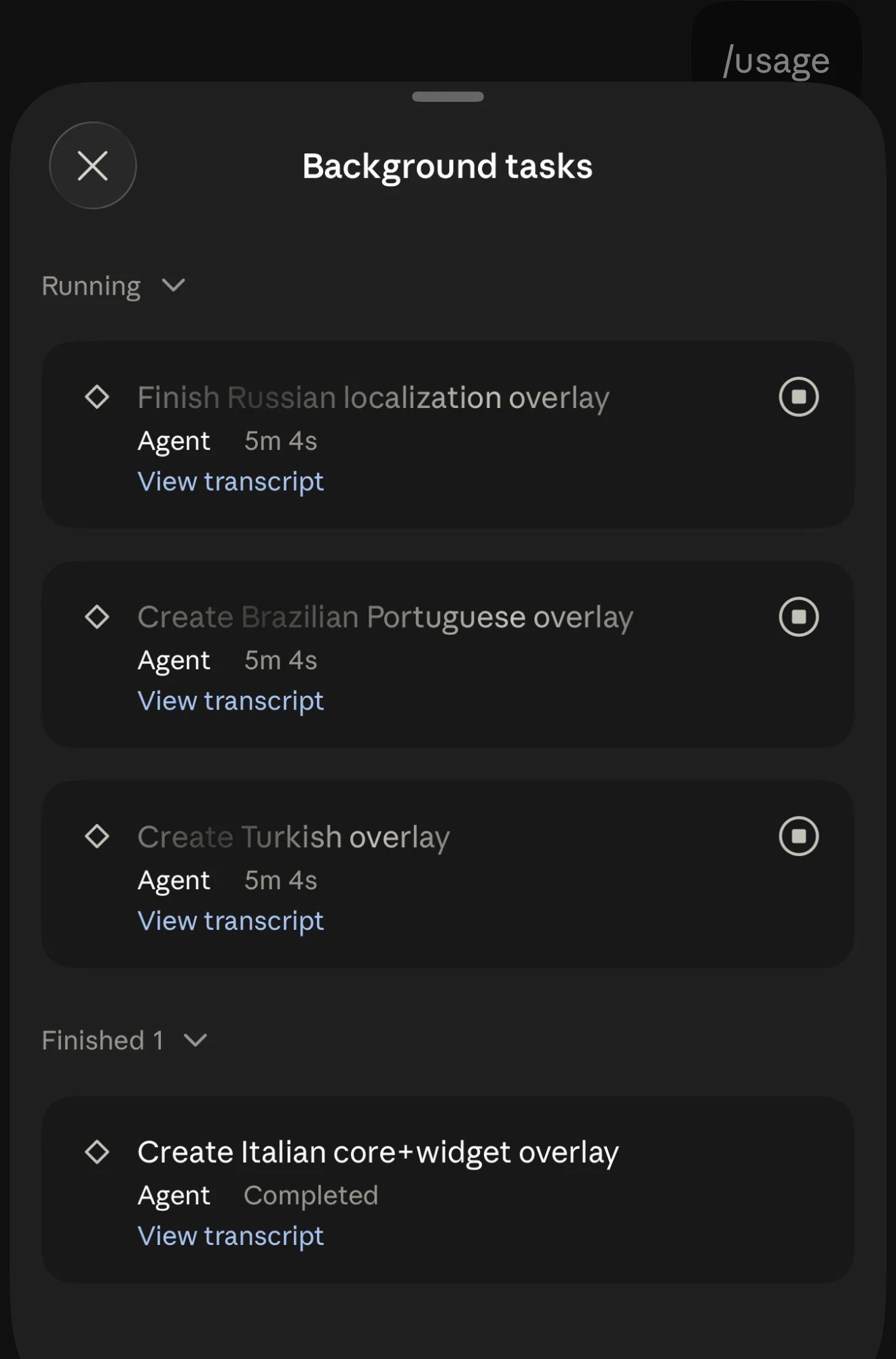
Skeleton by the time I walked in
By the time I got home, the new site skeleton and the language switcher were up. I made some adjustments, we talked through the next phase, I approved the changes, and I went to sleep. That sentence still feels strange to write. The last thing I saw was the switcher doing exactly what I wanted: no flags, each language as its own endonym with a code, a proper bottom sheet on mobile.
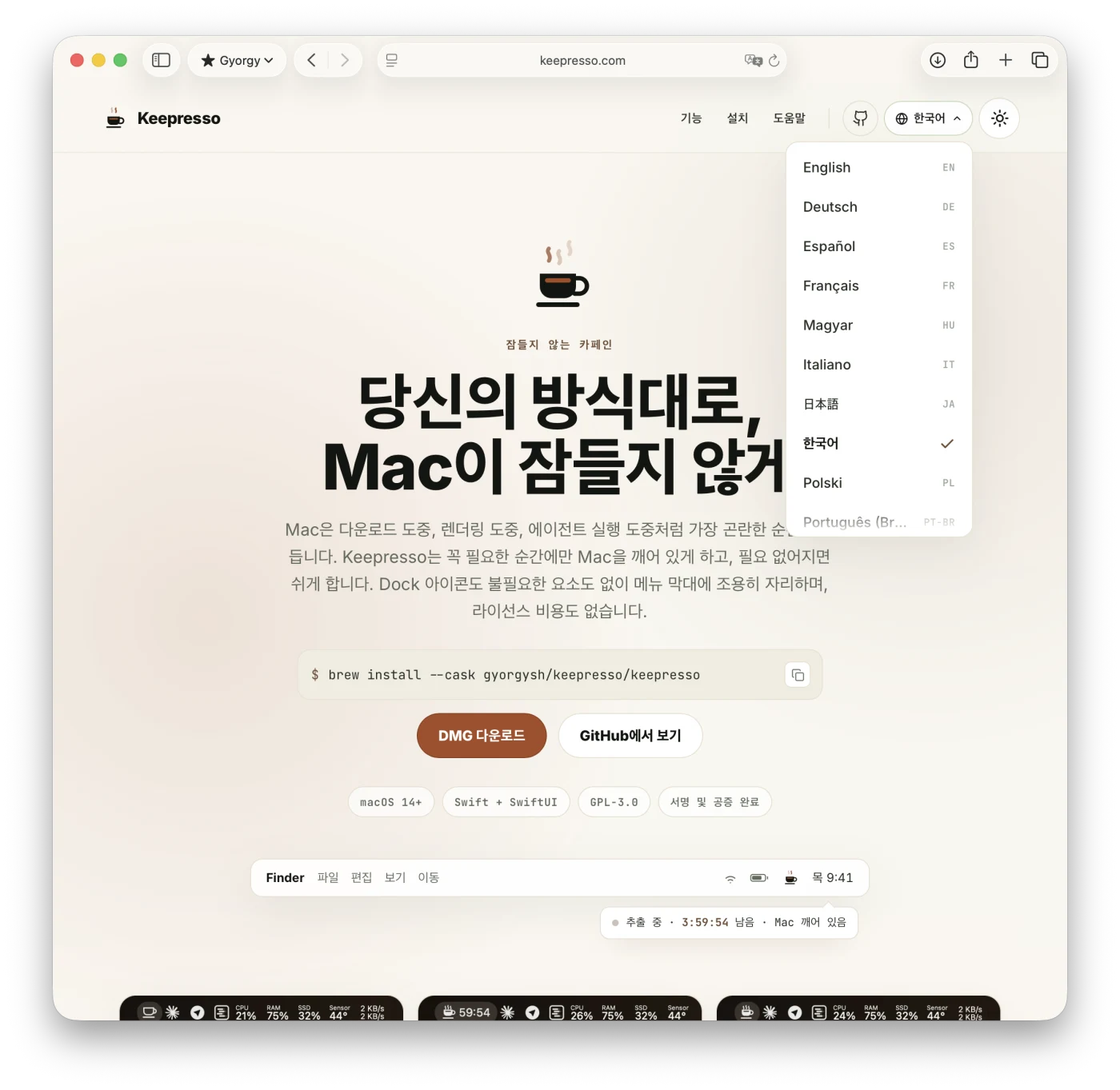
What was waiting for me in the morning
The agents worked through the night, and they did not just translate strings. They thought about the whole surface: SEO with hreflang and canonicals and per-locale sitemaps, page speed, mobile and desktop layouts, even matching font stacks so the CJK locales do not render in a mismatched fallback.
The result: around 500 new hydrated, server-rendered pages. Keepresso went out in all fifteen languages the app itself speaks: English, German, Spanish, French, Hungarian, Italian, Japanese, Korean, Polish, Brazilian Portuguese, Russian, Turkish, Ukrainian, and both Simplified and Traditional Chinese. MyAgens shipped in English and Hungarian for now. The pages hold 100/100 across Google's metrics, and the keyword surface of the sites grew by an order of magnitude overnight.
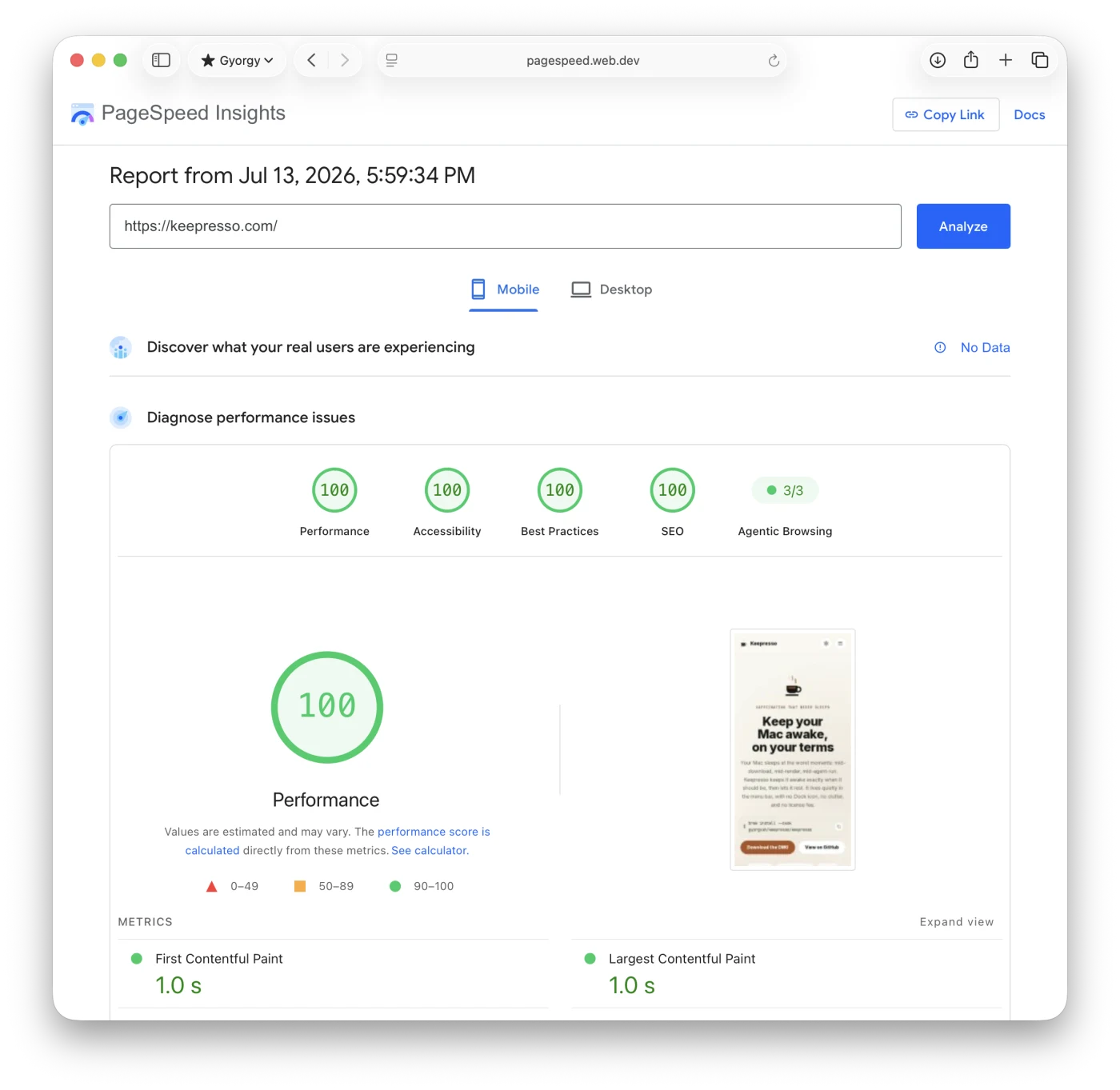
A side note from that report: PageSpeed now grades Agentic Browsing next to Performance and SEO, which tells you something about the year we are having. The sites score 3/3 on that too.
To be fair to the humans: the sites did not magically wake up to 100/100. I had spent the previous day tuning the whole platform to the latest the web offers, for speed, for user experience, and for exactly this kind of agentic browsing, and that part was not magic either, just a day of measuring and adjusting. The overnight work landed on a fast foundation and kept it fast. Anyone not giving their site that treatment these days is missing out, and readers, crawlers, and agents will all quietly go where it is faster.
Then came my part: the review. I went through the work with a long list of suggestions and refinements, we corrected them, and we validated the fixes together. That took a real chunk of the day, and it is the part I would never skip.
What seventeen languages used to cost
Here is the part that keeps rattling around in my head. At my previous SaaS, a project that has since been acquired, getting to seventeen languages cost us around 5000 EUR spread over 2018 to 2021. Through an agency, with human translators, because I wanted quality and not Google Translate. The tools back then genuinely could not do the job: they had no grip on context, and most languages are full of words where one form carries five meanings. Getting a page to feel natural took a person who understood both the language and the product.
Last night, a similar job ran to completion while I slept, for the price of a lunch, desserts included, bundled into a monthly subscription with its usage limits.
I am not claiming these Sonnet translations are perfect. They are maybe 97 percent there, and they will get corrected and polished over time, ideally with native speakers reading them. But here is the thing: fixing the remaining 3 percent is small, pleasant work. The expensive part was never the last coat of paint. It was the mechanical wiring of an entire codebase to be multilingual, times fifteen, and that part is simply done.
The job that remains
What did I actually do in all this? I did not write the translations, and I did not write a line of the hreflang logic. I wrote the brief. I picked the team shape, decided what ran in parallel and what had to wait, set the checkpoints, and defined what would count as done. In the evening I reviewed and adjusted; in the morning I went through everything with a red pen and sent the weak parts back. The night went exactly as well as the brief was clear.
It is a strange feeling, equal parts great and unsettling. Positive, because a solo builder can now do in one night what used to take a team and a budget. Scary, because the ground moved this fast and most of the world has not noticed yet. A little dystopian, because I approved plans from under a blanket while a fleet of minds rebuilt my sites in the dark. The world changed over our heads, and in my case that is not even a metaphor: it changed overnight, literally, while I was asleep.
I do not have a tidy conclusion. I have two redesigned sites, a to-do list of small translation fixes, and a note to self that the sharpest tool I used all night was a clearly written plan.